

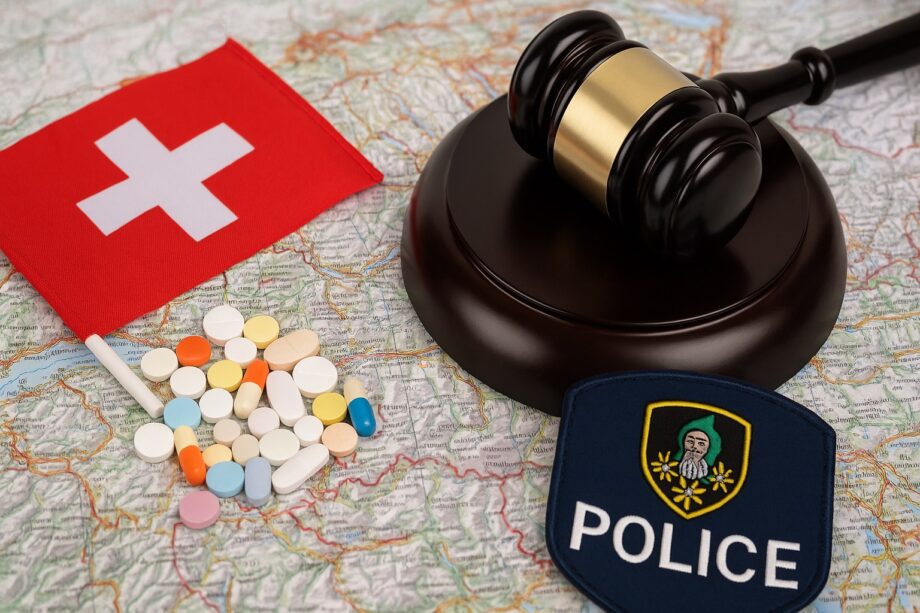
Switzerland is known for its breathtaking landscapes, precision engineering, and strict regulatory systems — and its drug laws are no exception. Tourists visiting the country often assume they can carry the same medications or supplements they use at home, only to discover at the border that Swiss regulations are far more restrictive. In clinical and travel-health settings, we often observe situations where travelers unintentionally violate rules simply because they were never clearly explained. This guide offers an authoritative, easy-to-understand breakdown of which drugs are banned in Switzerland, which require special documentation, and how tourists can avoid legal issues during their stay.
Understanding How Switzerland Regulates Drugs
Switzerland classifies medicines and controlled substances according to the Swiss Narcotics Act (NarcA) and oversight from Swissmedic, the national regulatory authority. Both recreational drugs and certain prescription medications fall under strict control.
According to Swiss government guidance, substances with high dependency potential or risk of misuse are heavily restricted or prohibited for travelers.
(Deep-source reference: Swissmedic Narcotics Act Overview — https://www.swissmedic.ch/swissmedic/en/home/humanarzneimittel/betreibung-kontrolle/betm-recht.html)
Tourists are allowed to bring personal medications, but only under specific conditions — and exceeding limits can lead to confiscation or, in rare cases, criminal penalties.
1. Completely Banned Drugs for Tourists
Some substances cannot be brought into Switzerland under any circumstances, not even with a prescription from another country.
These include:
- Heroin, cocaine, amphetamines, methamphetamine, and MDMA
- LSD, psilocybin, and other hallucinogens
- Synthetic cannabinoids (“Spice”)
- GHB and similar sedative street compounds
- Most anabolic steroids intended for bodybuilding rather than medical use
These substances are listed under the high-risk, Schedule-A narcotics category of Swiss law and remain illegal for possession, transport, or importation.
2. Restricted Prescription Medications (Bring With Caution)
Some medications that are perfectly legal elsewhere are controlled in Switzerland and require documentation if carried by tourists. Clinicians often see travelers surprised by these restrictions because the drugs are commonly prescribed in their home countries.
Common restricted medications:
- Opioid painkillers (oxycodone, hydromorphone, morphine)
- Benzodiazepines (diazepam, alprazolam, lorazepam)
- Strong sedative-hypnotics
- ADHD stimulants, such as methylphenidate (even with prescription)
Switzerland only allows a maximum 30-day personal supply, and travelers must be able to prove medical necessity.
A detailed Swiss narcotics import reference, published directly under national law, confirms these limits:
Swiss Narcotics Import Regulations — https://www.fedlex.admin.ch/eli/cc/2011/809/en
3. Over-the-Counter Drugs That Are Restricted or Prohibited
A lesser-known issue is that Switzerland restricts some medications that are OTC in other countries.
Examples include:
- Codeine-containing cough syrups or tablets
- Pseudoephedrine-based cold medications
- High-dose melatonin products (regulated as medicinal, not supplements)
- Certain herbal preparations with psychoactive properties
Travelers routinely misunderstand these restrictions because product categories vary across borders. What is considered a supplement in one country may be a controlled medicine in Switzerland.
4. Supplements and Research Chemicals: A Grey Zone
Some travelers bring nootropics, research chemicals, or sports supplements assuming they pose no legal risk. But Swiss authorities may classify certain compounds as controlled if they have stimulant or psychoactive effects.
These may be flagged:
- Synthetic nootropics
- Peptides or hormone-like substances
- Pre-workout stimulants containing banned analogues
Even without criminal intent, border officials can confiscate substances that fall under the Narcotics Act or Swissmedic’s controlled-medicine list.
When in doubt, it is always safest to verify substances through official Swissmedic documentation before travel.
Beyond traditional medications, many travelers also carry products marketed as cognitive enhancers, ADHD-support supplements, or nootropics. In Switzerland, substances commonly associated with ADHD medication — including certain stimulants and their analogues — are tightly regulated and may require documentation, even when purchased legally abroad. For those exploring cognitive tools, it is important to understand that Switzerland treats many nootropics as controlled substances if they have psychoactive effects, stimulant properties, or unclear clinical safety data. This means items that seem harmless in one country may be seized at customs if they fall under Swissmedic’s controlled category.
5. Traveling With Medication: What Tourists MUST Know
To avoid issues at customs, tourists should prepare in advance.
✔ Bring a doctor’s note
Switzerland requires proof of prescription for controlled medications.
✔ Keep medication in original packaging
Border agents are more likely to confiscate unlabeled pill containers.
✔ Carry only a 30-day personal supply
Exceeding this limit triggers investigation under narcotics laws.
✔ Prepare translations
If your prescription is not written in English, German, French, or Italian, bring a translated copy.
✔ Avoid mailing medications to Switzerland
Shipments are screened and more likely to be seized.
6. What Happens If You Bring a Banned Substance?
Punishments vary depending on the drug category and intent.
Possible consequences include:
- Confiscation of medication
- Fines
- Delays at the border
- In rare cases, criminal charges
Swiss authorities typically differentiate between unintentional possession (e.g., a misinformed tourist) and deliberate smuggling.
However, “I didn’t know” is not always accepted as a defense.
This is why pre-travel preparation is essential.
7. Case Example: A Common Tourist Mistake
In travel clinics, we often observe situations like this:
A tourist arrives with a strong opioid painkiller prescribed after surgery. They packed a 90-day supply because they would be abroad for three months. At Zurich Airport, customs confiscates two-thirds of their medication because Swiss law caps imports at 30 days. The traveler must seek a local physician for additional supply — a stressful and expensive process.
Such scenarios are preventable with correct documentation and planning.
8. How to Check Whether Your Medication Is Allowed
To help travelers avoid confusion, here are the safest verification strategies:
1. Check Swissmedic’s Controlled Substances List
Swissmedic maintains a detailed narcotics and controlled-medicines classification.
Source: https://www.swissmedic.ch/swissmedic/en/home/humanarzneimittel/betreibung-kontrolle/betm-recht.html
2. Consult the WHO for international medication control standards
The WHO provides global safety guidelines for psychoactive substances.
Source: https://www.who.int/publications/i/item/9789241572228
3. Speak with your prescribing doctor
They can provide documentation and supply recommendations.
4. Ask your airline or embassy
They frequently handle medication-related travel inquiries.
Summary Table: What Tourists Should Avoid Bringing Into Switzerland
| Category | Status | Notes |
|---|---|---|
| Hard narcotics | Banned | Includes heroin, cocaine, meth, MDMA |
| Hallucinogens | Banned | LSD, psilocybin, mescaline |
| Opioid medications | Restricted | Max 30-day supply + proof |
| Benzodiazepines | Restricted | Must carry prescription |
| ADHD stimulants | Restricted | Often questioned at customs |
| OTC codeine/pseudoephedrine | Limited | May require documentation |
| Melatonin (high dose) | Restricted | Treated as a medication |
| Supplements / research chemicals | Risky | May be seized if psychoactive |
Final Thoughts: Navigating Swiss Drug Laws Safely
Switzerland is a safe and orderly country — and its drug regulations reflect that commitment. Tourists who take even a few minutes to verify their medications can avoid delays, fines, and unnecessary stress. Ultimately, the safest approach is simple: when in doubt, check before you travel.
With clear information and responsible preparation, your trip to Switzerland can be not only memorable, but completely compliant with Swiss law.
